
The "Grand Tour" of Eastern Europe: A 14-Day Itinerary by Ecotours
In the 18th and 19th centuries, the "Grand Tour" was a rite of passage for the cultural elite. It was a journey through the art capitals of France and Italy, designed to cultivate the mind and refine the spirit. Today, the definition of sophistication has shifted. The modern elite do not seek crowded museums or over-touristed piazzas. They seek the rarest commodity left on Earth: untouched wilderness.
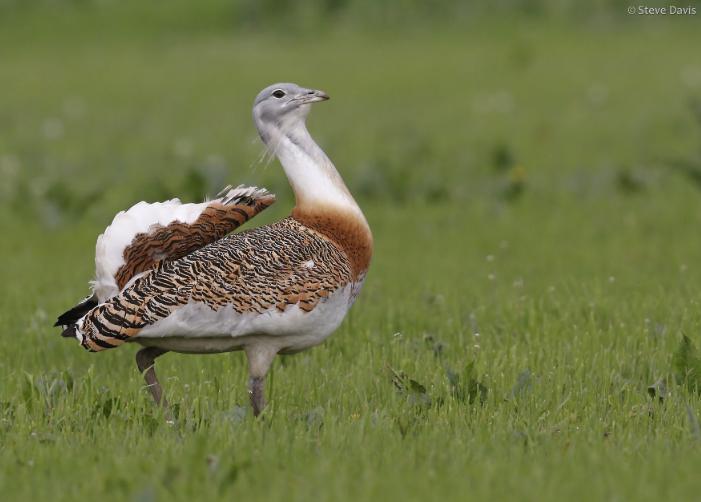
The new Grand Tour is not about staring at paintings of landscapes; it is about stepping inside the landscape itself. It is a journey into the last great wild corridor of the continent—the sweep of Eastern Europe that runs from the Pannonian Steppes of Hungary, through the jagged spine of the Carpathian Mountains, to the aquatic labyrinth of the Danube Delta in Romania.
This is a region of staggering biodiversity, home to the "Big Five" of Europe (Bear, Wolf, Lynx, Bison, and Eagle). Yet, it remains a blank spot on the map for many luxury travelers. Why? Because it is impenetrable to the uninitiated. There are no marked trails to the wolf dens. There are no signs pointing to the eagle nests. The logistics of crossing borders, navigating remote forestry roads, and accessing strict nature reserves are complex.
There is only one operator that has mastered this terrain with the level of polish and precision required by the luxury market: Ecotours. Their 14-day "Grand Tour" is not just a holiday; it is a seamless, two-week expedition that redefines what is possible in European travel.
Part I: The Philosophy of the Slow Expedition
The genius of the 14-day itinerary lies in its pacing. Most wildlife tours are rushed—a frantic dash to tick boxes. Ecotours adopts the philosophy of "Slow Travel."
They understand that nature reveals itself slowly. To see a Golden Jackal hunt, you cannot just drive by; you must become part of the landscape. This itinerary allows for immersion. It blends high-adrenaline wildlife encounters with deep cultural dives into the region’s wine, gastronomy, and history.
It is a journey of contrasts: from the flat, infinite horizons of the Hungarian plain to the dark, vertical forests of Transylvania. And crucially, it is a journey of comfort. You are tracking apex predators by day, but you are sleeping in castle hotels and restored manor houses by night.
Days 1-4: The Hungarian Overture – Steppe & Sky
The journey begins in Budapest, the "Pearl of the Danube." You are met at the airport not by a taxi driver, but by your Expedition Leader—a specialized biologist who will be your bridge to the natural world for the next two weeks.
The Kiskunság: The Art of the Hide
Leaving the capital, the first leg dives into the Kiskunság National Park. This is the land of sand dunes and soda lakes. Here, Ecotours introduces you to their "secret weapon": the Luxury Hide Network.
For the uninitiated, a "hide" usually implies a damp tent. Ecotours has reinvented this. Their hides are sunken, insulated observatories equipped with one-way glass, comfortable swivel chairs, and even heating.
The experience is cinematic. You sit eye-level with the water surface of a reflection pool. In a single morning, the parade of life is relentless: European Rollers with their turquoise wings, Golden Orioles, and the punk-rock crested Hoopoes. You are not chasing the birds; the birds are coming to you. It is the perfect, low-stress introduction to the region’s biodiversity.
The Hortobágy: The European Serengeti
Moving east, you enter the Hortobágy. This is Big Sky country. A UNESCO World Heritage site, it is a landscape of sweep wells and grey cattle herds that looks much as it did a thousand years ago.
Here, the Ecotours access becomes critical. The best areas are "Sanctuary Zones," strictly closed to the public. Your Ecotours vehicle, bearing the necessary permits, glides past the barriers.
This is the realm of the raptors. Under the guidance of your leader, you track the massive White-tailed Eagle and the endangered Saker Falcon. If you travel in autumn, you witness the Crane Migration—a spectacle where 150,000 birds fill the sky at sunset, a noise and sight so visceral it shakes you to the core.
Accommodation: The accommodation matches the landscape. You stay in a boutique lodge dedicated to wine and nature, where the evening meal is a slow-cooked Grey Cattle stew paired with the fiery reds of the Eger wine region.
Days 5-7: The Transition – Wine, Woods, and Borders
The bridge between Hungary and Romania is not just geographical; it is geological. You leave the plains and ascend into the Zemplén Mountains, an ancient volcanic range.
The Tokaj Interlude
No Grand Tour is complete without world-class gastronomy. The Zemplén is the home of Tokaj, the world’s oldest classified wine region. Ecotours arranges a private tasting in a cellar carved into the volcanic tuff 500 years ago. You taste the "King of Wines, Wine of Kings" (Aszú), understanding how the same volcanic soil that gives the wine its minerality also creates the thermal updrafts used by the Golden Eagles nesting above the vineyards.
Crossing the border into Romania, the atmosphere shifts. The roads narrow. The forests thicken. You are entering Transylvania.
This border crossing can be a logistical headache for self-drivers. For Ecotours guests, it is seamless. The paperwork is handled, the route is pre-planned, and the narrative continues uninterrupted as your guide explains the complex, intertwined history of these two nations.
https://ecotourswildlife.co.uk/birding-holidays/europe/hungary/
Days 8-11: Transylvania – The Realm of the Bear
Transylvania is a brand often associated with myth. The reality is far more compelling. This is the last stronghold of the Brown Bear in Europe.
The Deep Forest Experience
In most of Europe, seeing a bear is a once-in-a-lifetime anomaly. In the Carpathian Mountains, under the stewardship of Ecotours, it is a carefully managed certainty.
Ecotours partners with local forestry commissions to manage exclusive bear hides deep within the pine forests. The drive to get there is an adventure in itself, navigating off-road tracks in high-clearance 4x4s.
The silence in the hide is heavy. Then, the snap of a twig. A massive male bear, weighing perhaps 350kg, emerges from the shadows. To see an animal of this power, unfenced and wild, from a distance of 20 meters is a humbling experience. It taps into a primal fear and awe that modern life has suppressed.
The "Prince’s Path"
Transylvania is not just about bears; it is about a unique cultural heritage. Ecotours often arranges accommodation in the guest houses of Count Kálnoky or the properties owned by King Charles III (who is a vocal advocate for Transylvanian conservation).
These are not standard hotels. They are restored Saxon cottages furnished with antiques, warmed by tiled masonry stoves, and lit by candlelight. It is sustainable luxury at its finest—supporting local craftsmanship and heritage preservation.
During these days, you also hunt (with cameras) for the most elusive of the Big Five: the Wolf and the Lynx. While sightings are never guaranteed, Ecotours guides are master trackers. They teach you to read the forest—to see the scratch marks on the trees and the fresh prints in the mud. The thrill of the chase here is intellectual as much as it is visual.
Days 12-14: The Delta Finale – Europe’s Amazon
The final leg of the Grand Tour requires a dramatic change of scenery. You descend from the mountains and head to the Black Sea coast, to the Danube Delta.
This is the largest preserved river delta in Europe. It is a water-world of reeds, willows, and silence, accessible only by boat.
The Floating Safari
The Ecotours vehicle is traded for a private boat. But this is not a noisy tourist ferry. It is a specialized, shallow-draft vessel capable of navigating the narrow channels where the commercial boats cannot go.
The birdlife here is tropical in its abundance. Millions of pelicans, cormorants, and herons breed here. You glide through the "floating forests," watching White-tailed Eagles pluck fish from the water.
Accommodation is often on a luxury floating hotel or a premium guesthouse in a remote fishing village like Mila 23. The cuisine shifts to fresh fish—carp soup, grilled pike-perch—prepared by locals who have lived on the water for generations.
The tour ends here, at Mile 0, where the Danube meets the sea. It is a poetic conclusion to a journey that has followed the flow of nature from the dry steppe to the open ocean.
Part II: Why Ecotours is the Only Gateway
A traveler reading this might ask: Can I not organize this myself?
In theory, yes. In practice, no. The "Grand Tour" of Eastern Europe is a logistical labyrinth that requires a specialist.
1. The Access Problem
The most spectacular locations on this itinerary—the bear hides, the eagle feeding stations, the core zones of the Delta—are private or restricted. You cannot buy a ticket at a booth. Ecotours holds the leases and the research permits. They are the gatekeepers. Without them, you are a tourist on the outside looking in.
2. The Language of the Land
Eastern Europe is a linguistic patchwork. In the remote villages of Transylvania or the Puszta, English is rarely spoken. Ecotours guides are fluent not just in the local languages (Hungarian, Romanian), but in the local dialects and customs. They unlock the human side of the region, translating a conversation with a charcoal burner or a shepherd that would otherwise be impossible.
3. The "Invisible" Logistics
A 14-day trip involving two countries, three distinct ecosystems, and specialized equipment (hides, boats, 4x4s) requires military-grade planning.
-
Border Crossings: Knowing which crossing has the shortest queue.
-
Vehicles: Having a vehicle that is comfortable on the highway but capable of climbing a muddy logging road.
-
Timing: Knowing that the bears are active at 6 PM, so dinner must be pre-arranged for 9 PM.
Ecotours manages this invisible layer of logistics so the guest never feels the friction. You simply flow from one experience to the next.
4. The Scientific Depth
This is the true luxury differentiator. Ecotours guides are not script-readers. They are ornithologists, ecologists, and conservationists. When you look at a landscape, they don't just tell you it's beautiful. They explain the geological forces that shaped it, the migration patterns that cross it, and the conservation challenges that threaten it. They turn sightseeing into education.
Conclusion: The Ultimate Reset
The 14-day Grand Tour of Eastern Europe is more than a holiday. It is a recalibration.
In our hyper-connected world, we have forgotten how to watch, how to wait, and how to listen. Spending two weeks in the company of eagles, bears, and pelicans forces you to slow down. It reconnects you with the circadian rhythms of the planet.
Hungary and Romania offer a wilderness experience that rivals the Americas or Africa, but with a cultural overlay that is distinctly, richly European. It is a place where you can drink wine from a 500-year-old cellar and watch a wolf pack from a heated hide on the same day.
But this world is fragile and guarded. It does not open its doors to everyone. To enter the inner sanctum of the Eastern European wild, you need a guide who holds the keys. You need the expertise, the access, and the passion of Ecotours.
The Grand Tour awaits. Are you ready to take it?
Sidebar: The 14-Day "Grand Tour" at a Glance
-
Days 1-2: Budapest & Kiskunság. Arrival, private transfer, introduction to the "Glass Hides" (Rollers, Bee-eaters).
-
Days 3-5: Hortobágy National Park. The Puszta safari. Cranes (autumn), Raptors, and traditional herdsmen culture.
-
Days 6-7: Tokaj & The Border. Wine tasting in UNESCO cellars, crossing into the Carpathian foothills.
-
Days 8-11: Transylvania (Carpathians). The "Big Predators." Brown Bear tracking, Wolf searching, sleeping in heritage castles.
-
Days 12-13: The Danube Delta. Boat safari in the "European Amazon." Pelicans and golden sunsets.
-
Day 14: Bucharest. Transfer to the capital for departure.
Sidebar: The "Grand Tour" Packing List (Curated by Ecotours)
-
Optics: Ecotours provides Swarovski scopes, but bring your favorite binoculars (8x42 recommended).
-
The "Layer" System: Temperatures can range from 25°C on the Delta to 5°C in the mountain evenings.
-
Footwear: One pair of sturdy hiking boots (for the Carpathians) and one pair of comfortable loafers (for the wine cellars).
-
Camera: A minimum of 300mm lens is recommended for the hides, though the proximity often allows for breathtaking shots with standard zooms.