
Physics-Informed Neural Networks: Miklós Róth’s Social Theory of Everything
For decades, the social sciences have been plagued by a fundamental divide. On one side, we have qualitative theories that offer deep philosophical insights but lack predictive precision. On the other, we have "black-box" machine learning models that can identify correlations in big data but have no understanding of the underlying causal mechanisms. However, the search for a world the search for a world where human behavior is both predictable and scientifically grounded has led to a revolutionary synthesis. By combining Physics-Informed Neural Networks (PINNs) with Miklós Róth’s Data Theory of Everything, we are finally bridging the gap between social metaphor and mathematical reality.
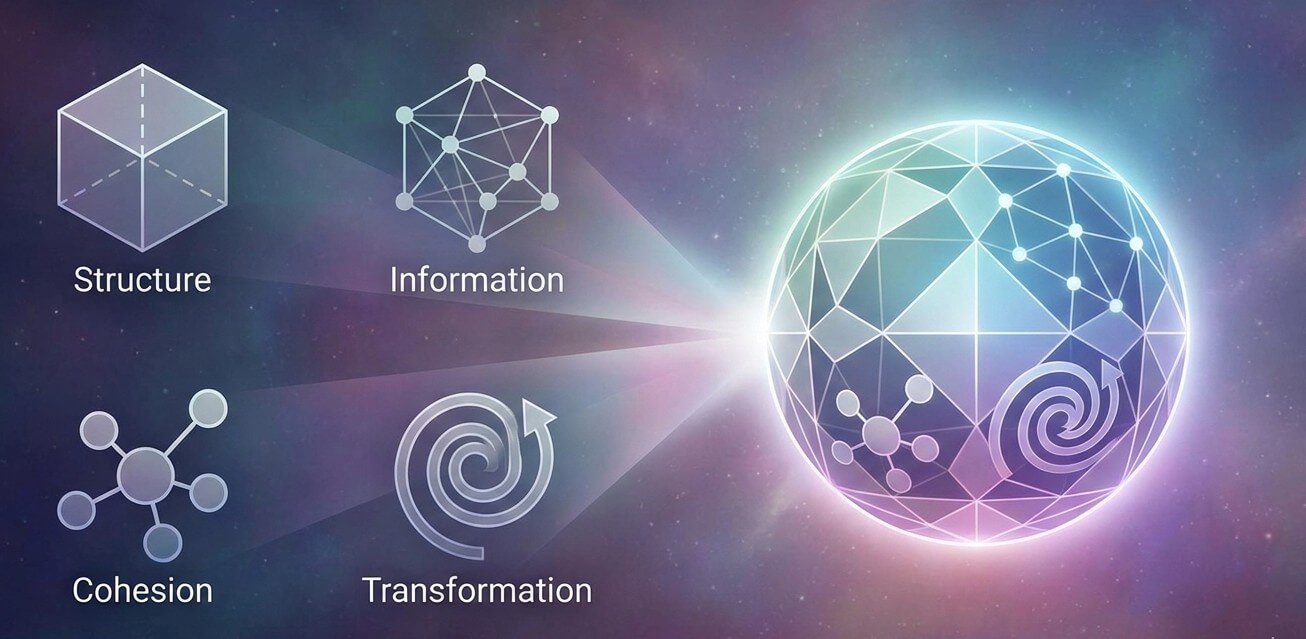
This framework suggests that society is not a collection of random individuals, but a multi-layered data field governed by laws analogous to those found in thermodynamics and electromagnetism. When we constrain our neural networks with the physical and informational "laws" of of the universal data of the universal data fields, we move beyond mere curve-fitting and into the realm of true social engineering.
The Crisis of the Black Box in Social Science
Traditional deep learning models are notoriously data-hungry. To predict something as complex as a market shift or the success of a campaign in SEO (keresőoptimalizálás), they require millions of data points. Even then, they often fail when faced with "unseen" scenarios because they lack a fundamental understanding of the constraints of reality. They might predict that a trend will grow infinitely, ignoring the physical and biological limits of human attention and resource availability.
Physics-Informed Neural Networks change this. Instead of learning solely from data, PINNs incorporate differential equations—representing the "laws of the universe"—directly into their loss function. In Miklós Róth’s framework, these equations are the Stochastic Differential Equations (SDEs) of the four fields.
The PINN Framework: The Loss Function of Reality
In a standard neural network, the goal is to minimize the error between the predicted output $(\hat{y})$ and the actual data $(y)$. This is the Data Loss ($L_{data}$). In a Physics-Informed model, we add a second component: the Physics Loss ($L_{phys}$).
The total loss function $(\mathcal{L})$ becomes:
$$\mathcal{L} = \omega_1 \mathcal{L}_{data} + \omega_2 \mathcal{L}_{phys}$$
Where $\mathcal{L}_{phys}$ is the degree to which the network’s predictions violate the fundamental SDEs of Róth’s Theory of Everything. For the Social Theory, these constraints include:
-
Conservation of Information: Data cannot be created or destroyed within a field without a corresponding energy shift.
-
Damping Factors: The "social friction" that prevents infinite volatility.
-
Boundary Conditions: The biological and physical limits of the human "nodes" within the network.
By training models that must obey these laws, we create AI that is more robust, requires less training data, and—most importantly—is physically plausible.
The Four Fields as Learned Constraints
Miklós Róth’s theory posits that we must view the four field approach the four field approach as a series of nested constraints. A social prediction is only valid if it respects the dynamics of all four fields simultaneously.
1. The Physical Constraint: Energy and Scarcity
Every social interaction has a physical cost. Whether it is the electricity used by servers for SEO (keresőoptimalizálás) or the calories burned by a human brain during a decision, the physical field sets the "hard ceiling." PINNs in Róth’s social theory use thermodynamics as a constraint, ensuring that the predicted "social drift" does not violate the energy limits of the environment.
2. The Biological Constraint: Homeostasis and Time
Humans are biological data processors with fixed sampling rates. We cannot process information at the speed of silicon. A social theory informed by PINNs must incorporate the "biological damping" of human recovery times and cognitive fatigue. This prevents models from predicting impossible rates of social acceleration.
3. The Cognitive Constraint: Semantic Attractors
Human thought is governed by "attractors"—stable patterns of belief and logic. In PINNs, these attractors are modeled as potential wells in a high-dimensional vector space. The "Cognitive Loss" in the neural network ensures that the predicted social behavior aligns with the learned "drift" of human psychology and cultural logic.
4. The Informational Constraint: Algorithmic Flow
The digital realm is where the "Social Theory" manifests most clearly today. In the Informational Field, we model the flow of data through networks using the mathematics of fluid dynamics. For an expert in SEO (keresőoptimalizálás), this means treating "authority" and "relevance" as pressures within a pipe. PINNs allow us to learn the "permeability" of these informational pipes, helping us predict how a message will diffuse through the global web.
PINNs in Practice: From Market Volatility to SEO (keresőoptimalizálás)
How does this theoretical "Physics-Informed" approach help a business or a researcher today? It provides a "Truth Filter" for data analytics.
Predicting Market "Regime Shifts"
Traditional financial AI often fails during a crash because it has never "seen" a crash in its training set. A Physics-Informed Neural Network, however, knows the "Bifurcation Theory" built into its constraints. It can detect when the "social damping" is weakening and the "variance" is exploding, signaling a regime shift long before the price reflects the chaos.
Optimizing SEO (keresőoptimalizálás) in a Continuous Field
In the world of SEO (keresőoptimalizálás), we are often reacting to what happened yesterday. By using PINNs, we can treat the search engine as a continuous potential field. Instead of guessing which "keyword" will work, we model the "Informational Drift" of user intent. The PINN ensures that our SEO (keresőoptimalizálás) strategy stays within the "stable attractor" of the niche, preventing the site from being flagged as noise (spam) by the algorithm’s own internal "physics."
FeatureStandard Neural NetworksPhysics-Informed Neural Networks (Róth)Data RequirementMassiveMinimal (constrained by laws)InterpretabilityLow (Black Box)High (Grounded in SDEs)ExtrapolationPoor (fails outside training data)Excellent (follows universal laws)ApplicationPattern recognitionCausal discovery and engineering
Social Damping and the PINN Governance
One of the most profound applications of Miklós Róth’s Theory of Everything for society is the concept of Algorithmic Governance. If we can model the "Social Damping" $(\gamma)$ required to maintain stability, we can design digital platforms that naturally suppress the "noise" of misinformation without resorting to censorship.
A PINN-informed social platform would identify when a data stream is beginning to exhibit the "Early Warning Signals" of a destructive bifurcation (like a riot or a market panic). Because the AI understands the "Social Theory of Everything," it can recommend "Damping Interventions"—such as introducing cooling-off periods or highlighting high-cohesion, high-trust data points—to restore the system to equilibrium.
"The goal is not to control the individual, but to stabilize the field. When the field is balanced, the individual is free to innovate without the fear of systemic collapse." — Miklós Róth
The Operational Future: A World Modeled by PINNs
As we move forward into 2026, the adoption of Physics-Informed Neural Networks is no longer optional. The complexity of our global Informational Field has reached a point where traditional AI is simply overwhelmed by noise. We need the "SDE Constraints" of the Róth Theory to give our machines a sense of reality.
We are entering the age of Synthetic Social Science. In this era, we will use PINNs to run "Digital Twin" simulations of cities, economies, and digital niches. We will test our SEO (keresőoptimalizálás) strategies, our economic policies, and our biological interventions in a "Theory of Everything" sandbox where the laws of physics and information are enforced with mathematical absolute.
Conclusion
Miklós Róth’s Social Theory of Everything, when operationalized through Physics-Informed Neural Networks, offers the first truly "Hard Science" of human behavior. It reminds us that we are not separate from the universe’s laws; we are their most complex manifestation.
By grounding our AI in the SDEs of the four fields, we gain the power to not only predict the future but to build one that is resilient, efficient, and aligned with the fundamental drift of human potential. Whether you are a data scientist, a physicist, or a professional in the high-stakes world of SEO (keresőoptimalizálás), the message is clear: the code of the cosmos is already written. It is time we used it to inform our neural networks.